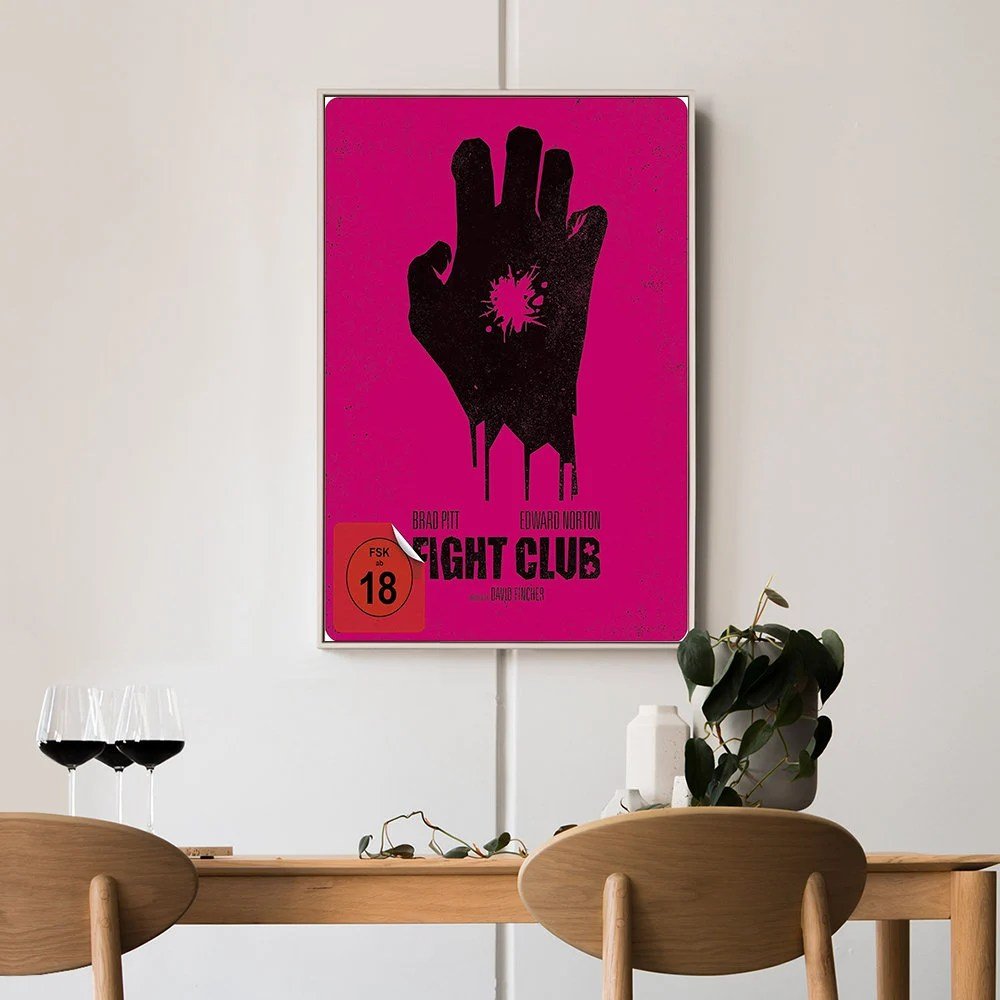
The world of movie poster collecting is a thrilling chase, and few quarry are as coveted, iconic, and fraught with potential pitfalls as an authentic Fight Club poster. Whether you're a seasoned cinephile or a newcomer drawn to the film's enduring counter-culture magnetism, successfully collecting authentic Fight Club movie posters requires a sharp eye, careful research, and a deep understanding of what makes a piece genuine. This isn't just about owning a piece of cinema history; it's about discerning the real deal from clever reproductions and fakes, ensuring your investment is as solid as the film's legendary reputation.
Dive into the details, and you’ll find that the pursuit of these visual manifestos—from the stark simplicity of the soap bar to the gritty, rebellious imagery—is a rewarding endeavor that connects you directly to the chaos and freedom that define the film.
At a Glance: What You Need to Know
- Authenticity First: Always verify the poster's origin. Look for original theatrical releases (OS or NSS) versus re-prints or reproductions.
- Key Identifiers: Union bugs, NSS numbers, specific paper stock, and printing quality are crucial clues.
- Condition Matters: Understand industry grading (C1-C10) as it significantly impacts value.
- Reputable Sources: Buy from established dealers, auction houses, or trusted communities to minimize risk.
- Iconic Art: The "soap bar" and "You do not talk about Fight Club" designs are among the most sought after.
- Preservation: Proper framing and storage are essential to protect your investment.
Why Fight Club Posters Resonate: A Cultural Touchstone
Fight Club isn't merely a film; it’s a cultural revolution, as noted by fightclubposter.com, and its iconic posters perfectly encapsulate the raw, anarchic spirit at its core. Released in 1999, David Fincher's adaptation of Chuck Palahniuk's novel struck a nerve, offering a searing critique of consumerism, masculinity, and societal alienation. The film's lasting impact is palpable, constantly rediscovered by new generations who connect with its themes of rebellion and identity.
This enduring appeal translates directly into high demand for its promotional materials. The posters aren't just advertisements; they are pieces of art that capture the movie’s essence—a visual manifesto of chaos and freedom. From the minimalist elegance of the bar of soap with the title embossed, to the shadowy figures of Tyler Durden and the Narrator, each design tells a part of the film's complex story. Understanding this cultural significance is the first step in appreciating why these posters are so highly collectible and why their authenticity is paramount.
The First Rule of Collecting: Know Your Prints
Before you even think about purchase prices, you need to understand the different types of posters available and, crucially, which ones hold genuine collector value. Not all posters are created equal, and mistaking a reprint for an original is a costly error.
Original Theatrical Release Posters
These are the holy grail for collectors. They were printed by the studio or its authorized distributors (like National Screen Service in the U.S.) for display in movie theaters around the time of the film's initial release. They are often referred to as "Original One Sheets" (OS) or "NSS posters" (in the US).
- Characteristics: Typically printed on heavier, sometimes glossy paper stock, with sharp image quality. They might have specific folds from distribution, and, critically, often include identifying marks like union bugs or NSS numbers.
- Value: These command the highest prices due to their scarcity and direct connection to the film's original marketing campaign.
Re-Release Posters
Sometimes, popular films are re-released in theaters years after their initial run. New posters are often printed for these re-releases.
- Characteristics: These are legitimate promotional items but are distinct from the original theatrical run. Their designs might be similar or entirely new. They will bear different printing dates or codes.
- Value: While collectible, they generally don't hold the same value as original first-release posters. However, some re-release posters can become valuable in their own right, especially if they feature unique artwork or commemorate a significant anniversary.
Reproductions, Reprints, and Fakes
This category is where caution is paramount. Many companies produce reproductions for decorative purposes, sometimes without explicit branding that differentiates them from originals. Fakes, on the other hand, are deliberately misrepresented as originals to deceive buyers.
- Characteristics: Reproductions are often printed on thinner, cheaper paper, or sometimes on high-quality photo paper. They may lack the fine details, proper color saturation, or identifying marks of originals. Fakes can be extremely convincing, even replicating folds or minor wear, but will ultimately fail the rigorous authenticity checks.
- Value: These have little to no collector value. Their worth is purely decorative.
The Golden Rule: Always assume a poster is a reproduction unless you have strong evidence to the contrary from a reliable source. This mindset will save you significant grief and money.
Decoding Authenticity: What to Look For
So, how do you tell if that alluring Fight Club poster is the real deal or a convincing imposter? It comes down to meticulous inspection, often requiring some magnification and comparison.
The One Sheet: Standard Dimensions
The most common and desirable size for original theatrical posters in the US is the "One Sheet," measuring approximately 27x40 inches or 27x41 inches. Deviations from this standard could indicate a different type of poster (e.g., a "mini-lobby card" or an international size) or, more ominously, a reproduction. While other sizes exist, like inserts (14x36") or half-sheets (22x28"), the one-sheet is typically the most iconic.
International Posters: Global Variations
Fight Club was released worldwide, leading to a fascinating array of international posters. These can feature different artwork, alternative taglines, and are printed in various languages.
- Example: A Japanese B2 poster (approx. 20x28.5 inches) or a French Grande (47x63 inches) will have distinct characteristics. While not "US originals," these are legitimate and highly collectible in their own right, often boasting unique artistic interpretations. Always verify the specific country of origin and its standard poster sizes and markings.
Key Art and Variations: The Iconic Imagery
The core Fight Club artwork is instantly recognizable. Understanding the primary designs helps with identification:
- The Soap Bar: A minimalist yet powerful design featuring the iconic pink bar of soap with the title. This is perhaps the most famous and sought-after.
- The "You Do Not Talk About Fight Club" Poster: Often shows the central trio (Edward Norton, Brad Pitt, Helena Bonham Carter) with the infamous rule as a dominant text element.
- Advance/Teaser Posters: Released prior to the main campaign, these often have simpler designs and omit release dates. They can be particularly rare.
Be aware that popular designs are also the most frequently reproduced. Look beyond the image itself to the physical characteristics.
Printing Indicators: Lithography and Paper Stock
Original theatrical posters, especially from the 1990s, were typically printed using offset lithography, which produces a distinct dot pattern (screen dots) that can be visible under magnification. Modern digital prints often show a different, more uniform pixel pattern, or a finer, less defined dot pattern.
- Paper Stock: Original posters generally use a specific weight and finish of paper. It's often thicker, sometimes with a slight sheen, designed to withstand handling in theaters. Reproductions might feel lighter, flimsier, or have an overly glossy or matte finish that doesn't match originals. Developing an eye for paper quality often comes with experience.
Union Bugs and Copyrights: The Small Print That Matters
This is one of the most reliable indicators of authenticity for US posters.
- Union Bug: A small, often circular or oval logo, usually found in the bottom left or right corner of the poster. It indicates that the poster was printed by a union print shop. The presence of a legitimate union bug (e.g., "Local 282" or "Allied Printing Trades Council") strongly suggests an authentic theatrical poster. Its absence on a US poster, particularly from the 90s, is a red flag.
- Copyright Information: Original posters will always include copyright details for the studio, often with the year of release. Check if the studio name (20th Century Fox) and year (© 1999) are present and correctly formatted.
Studio Watermarks and Logos
While not always present or obvious, some studios incorporate subtle watermarks or logos into the poster design, often in a corner or alongside the copyright information. These are harder to replicate accurately.
The NSS Number (National Screen Service)
For US posters released between 1940 and 1984, the National Screen Service (NSS) distributed virtually all theatrical posters. They assigned a unique number to each poster, typically printed in the bottom right corner (e.g., "99/1234"). While Fight Club was released after NSS ceased direct distribution, many studios continued to use a similar numbering convention or simply continued to use the term "NSS" in their internal records. The presence and correct format of a numerical code, particularly one indicating the year of release (e.g., '99-' for 1999), can be a strong indicator of an original studio-issued poster. Always research the expected format for Fight Club posters specifically.
Condition Is King: Grading Your Investment
Even an authentic poster loses significant value if it's in poor condition. Understanding the industry-standard grading scale is crucial for both buying and selling. Most dealers use a scale of C1 (poor) to C10 (mint).
- C10 - Mint: Perfect, as if just printed. No flaws whatsoever. Extremely rare, especially for older posters.
- C9 - Near Mint: Almost perfect, minor imperceptible flaws.
- C8 - Excellent: Very minor flaws, perhaps a tiny edge wrinkle or faint handling crease. Still displays beautifully.
- C7 - Very Good: Minor flaws noticeable upon close inspection, e.g., small tears, pinholes, light folds, minor smudges. Still highly desirable.
- C6 - Good: Noticeable flaws like larger tears, moderate creasing, some fading, but generally intact.
- C5 - Fair: Significant damage, perhaps multiple tears, heavy creasing, significant paper loss, water damage.
- C1-C4 - Poor: Heavily damaged, incomplete, or severely compromised. Primarily for historical or restoration purposes.
Most vintage posters will fall into the C6-C8 range. Always request detailed photos and a comprehensive condition report, especially for expensive pieces. Don't be shy about asking for high-resolution images of any noted flaws.
Common Damage to Watch For
- Folds: Many older posters were folded for shipping. Factory folds are common and expected; haphazard or extra folds are not.
- Pinholes: From being tacked up in theaters. A few discrete pinholes are common; a cluster is less desirable.
- Tears & Creases: Indicates handling damage. The location and size matter.
- Paper Loss: Missing pieces of the poster. Very detrimental to value.
- Fading & Discoloration: Exposure to light or poor storage can cause colors to fade or paper to yellow.
- Water Stains: Can cause ripples, discoloration, and mold.
Restoration vs. Original Condition
Some posters undergo professional restoration, which can include cleaning, de-acidification, tear repair, and color touch-up.
- Linen Backing: This is a common and accepted form of preservation and restoration for paper posters. The poster is mounted onto acid-free paper, then onto canvas, which provides stability, allows for crease removal, and makes future handling safer. A linen-backed poster is generally more desirable than a similarly damaged poster that hasn't been treated. However, it's crucial that any restoration is reversible and professionally done.
- Value Impact: While linen backing can enhance a poster's appearance and stability, fully original, unrestored posters in high condition will generally command the highest prices. Always ask if a poster has been restored, and if so, to what extent.
Where to Find Authentic Fight Club Posters
The internet has democratized collecting, but it's also a minefield for fakes. Your primary goal should be to minimize risk by buying from trusted sources.
Reputable Dealers
Specialized movie poster dealers, both online and with physical storefronts, are your safest bet. They have expertise in authentication, often provide condition reports, and stand by their products.
- How to vet: Check their reputation, read reviews, inquire about their return policy, and see how long they've been in business. Ask them specific questions about the poster's provenance.
- Examples: Websites like Posteritati (a good example of a high-quality dealer from our research) and other established names in the collecting world.
Auction Houses
Major auction houses (e.g., Heritage Auctions, Profiles in History for entertainment memorabilia) frequently offer high-value, authenticated movie posters.
- Pros: Thorough authentication, detailed condition reports, established reputations.
- Cons: Prices can be higher due to competitive bidding and buyer's premiums.
Specialized Forums and Communities
Online forums, social media groups, and dedicated collector communities can be excellent resources for finding posters and getting advice.
- Pros: Direct access to other collectors, often good prices, and a wealth of shared knowledge.
- Cons: Requires more due diligence on your part, as individual sellers might not offer the same guarantees as a dealer. Always use secure payment methods and verify sellers.
What to Avoid (or Approach with Extreme Caution)
- General E-commerce Sites (e.g., eBay, Etsy) without Verification: While you can find authentic posters here, these platforms are rife with reproductions. If buying, ensure the seller has impeccable feedback, provides extremely detailed photos, and offers a clear authenticity guarantee. Always compare their listing to known authentic examples.
- Unregulated Marketplaces: Flea markets, antique malls, or random online classifieds without a clear paper trail are generally too risky unless you are an expert capable of instant, on-the-spot authentication.
Pricing and Valuation: What Drives Worth
The value of an authentic Fight Club movie poster isn't static; it's a dynamic interplay of several factors.
- Rarity: How many original copies were printed and survived? Teaser posters, international variants with limited distribution, or posters for specific premieres can be rarer than standard one-sheets.
- Condition: As discussed, this is paramount. A C9 original will be worth significantly more than a C6 original of the same poster.
- Key Art/Desirability: The iconic "soap bar" design is consistently more sought after and thus more valuable than less recognizable variants. Some designs simply resonate more with collectors.
- Market Demand: Fight Club's enduring popularity ensures a healthy demand. However, general economic trends and collector interest can fluctuate.
- Provenance: A clear history of ownership, especially if it traces back to an industry professional or a well-known collection, can add value.
- Signatures: While not an inherent part of the poster's original value, a genuine, authenticated signature from a cast member (e.g., Brad Pitt, Edward Norton, Helena Bonham Carter) or director David Fincher can dramatically increase value. Be extremely cautious about unauthenticated signatures.
Factors that Decrease Value:
Conversely, damage, lack of originality, poor restoration, or a less desirable design will all depress a poster's market value. Always compare prices for similar posters in similar conditions from multiple reputable sources before making a purchase.
Protecting Your Investment: Display and Storage Best Practices
Once you've acquired an authentic Fight Club poster, your next priority is to preserve its condition and value for years to come. Proper display and storage are non-negotiable.
Archival Framing
This is the gold standard for displaying your poster. It protects against physical damage and environmental factors.
- Acid-Free Materials: Ensure all materials touching your poster—the mat board, backing board, and tape—are acid-free and archival quality. Acids can degrade paper over time, causing yellowing and brittleness.
- UV Protection: Choose frame glass or acrylic that offers UV protection. Ultraviolet light is a primary culprit for fading colors and damaging paper. Acrylic options often provide superior UV blocking and are lighter and shatter-resistant.
- Professional Framing: Unless you have experience with archival framing, trust a professional framer who specializes in artwork or collectibles. They will ensure the poster is mounted correctly without damage.
Temperature and Humidity Control
Extreme fluctuations in temperature and humidity are detrimental to paper.
- Stable Environment: Display and store posters in areas with stable, moderate temperatures (around 65-75°F or 18-24°C) and relative humidity (around 45-55%).
- Avoid Extremes: Never store posters in basements (high humidity, potential for flooding/mold), attics (extreme temperature swings), or near direct heat sources or vents.
Flat Storage vs. Rolled
For posters not on display, proper storage is vital.
- Flat Storage (Preferred): The best method is to store posters flat in acid-free archival sleeves or folders, which are then placed in flat files or art storage boxes. This prevents creasing, rolling memory, and stress on the paper.
- Rolled Storage (Acceptable with Care): If flat storage isn't feasible, roll posters loosely (never tightly) and place them in acid-free Mylar sleeves within sturdy, acid-free tubes. Ensure the tube diameter is large enough to prevent tight curling. Avoid long-term storage in rolled tubes, as the paper can "set" in a rolled position, making it difficult to flatten later without risk of damage.
Common Pitfalls and How to Avoid Them
The journey of collecting Fight Club movie posters can be exhilarating, but it's also paved with potential missteps. Stay vigilant to protect your passion and your wallet.
- Falling for "Reprints" Disguised as Originals: This is the most common pitfall. Always question a deal that seems too good to be true. A genuine Fight Club one-sheet in excellent condition will command a significant price. If it's suspiciously cheap, it's almost certainly a reproduction.
- Avoidance: Demand clear, high-resolution photos of all corners and edges, especially the bottom where union bugs or NSS numbers would be. Cross-reference any identifying marks with known authentic examples.
- Ignoring Condition Reports: Don't let excitement blind you to flaws. A poster listed as C7 with "minor edge wear" might, upon closer inspection, have a significant tear or creased corner that drastically impacts value.
- Avoidance: Request multiple photos from different angles, scrutinize condition reports, and if buying online, ensure the seller has a transparent return policy if the condition isn't as described.
- Overpaying Without Research: The market for Fight Club posters fluctuates. Paying top dollar for a common variant or a poster in average condition is a quick way to regret your purchase.
- Avoidance: Monitor recent sales of similar posters on reputable auction sites, consult price guides (if available), and understand what factors drive value before committing to a price. Patience is a virtue in collecting.
- Not Asking for Provenance: The history of a poster's ownership can add to its credibility and value. While not always available for every piece, a lack of any information might raise questions.
- Avoidance: Always ask sellers about the poster's history: where they acquired it, how long they've owned it, and any details about its prior life. While this isn't foolproof, it helps build a picture of legitimacy.
Beyond the One-Sheet: Deepening Your Fight Club Collection
While the iconic one-sheet posters are often the primary focus, the world of Fight Club movie memorabilia extends further, offering additional avenues for dedicated collectors.
- Advance/Teaser Posters: These are often released months before the film and feature preliminary artwork, sometimes without a release date. They can be rarer than standard theatrical posters and often have unique designs that foreshadow the film's themes. The "soap bar" design sometimes appeared as an advance poster.
- Limited Edition Art Prints: Companies like Mondo have gained renown for producing artistically rendered, limited-edition screen prints for cult films. While these are not original theatrical posters, they are highly collectible art pieces. If Mondo (or a similar reputable art house) produced a Fight Club print, it would be a distinct, valuable collectible in its own right, though fundamentally different from a vintage film poster. Always understand if you're buying a limited art print or a theatrical poster.
- Lobby Cards: These were smaller, card-stock prints (usually 11x14 inches) displayed in theater lobbies, typically in sets of eight, featuring different scenes from the film. While less common for newer films, Fight Club may have had some, though they're less a focus for poster collectors.
- International Variations: As mentioned earlier, exploring posters from different countries can reveal fascinating artistic interpretations and rare finds. A German, Japanese, or French Fight Club poster can be a stunning addition, often with distinct aesthetics and sometimes more adventurous designs than their US counterparts.
These items allow you to build a more diverse and comprehensive collection, showcasing different facets of Fight Club's visual legacy.
Your Next Step: Joining the Fight Club Collectors Community
Collecting authentic Fight Club movie posters isn't just a solitary pursuit; it's a journey best shared. The vibrant community of movie poster enthusiasts is one of your greatest assets.
- Engage and Learn: Join online forums, Facebook groups, and Reddit communities dedicated to movie poster collecting. Observe, ask questions, and share your experiences. Many seasoned collectors are eager to help newcomers avoid common mistakes and identify genuine pieces.
- Attend Shows: If possible, visit movie poster conventions or trade shows. These events offer a unique opportunity to see authentic posters firsthand, compare notes with dealers and collectors, and physically inspect items before purchasing.
- Develop Your Eye: The more authentic posters you see (online or in person), the better you'll become at recognizing the subtle cues of originality—the texture of the paper, the sharpness of the print, the presence of correct markings.
- Embrace the Hunt: Part of the joy of collecting is the thrill of the chase. Be patient, do your homework, and enjoy the process of learning, discovering, and eventually, owning a genuine piece of Fight Club history.
Ultimately, collecting authentic Fight Club movie posters is a testament to your passion for cinema and an appreciation for tangible art. With careful attention to detail, a commitment to research, and a healthy dose of patience, you can build a collection that truly captures the raw, anarchic spirit of a film that continues to challenge and inspire.