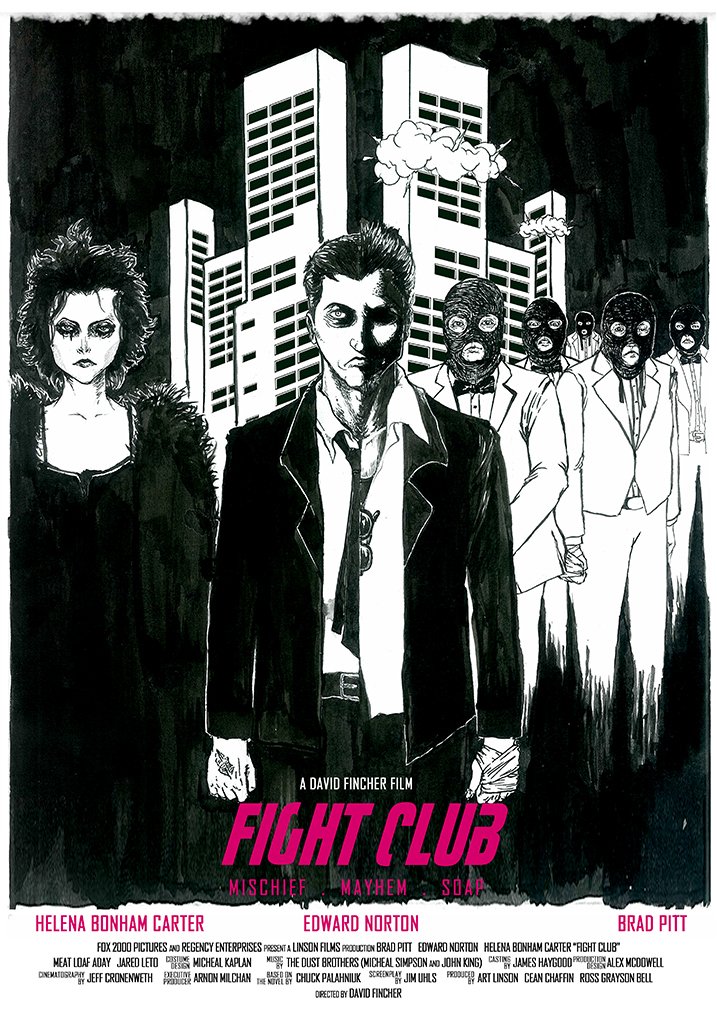
It’s an undeniable truth: some films don't just entertain, they embed themselves in the cultural psyche, evolving far beyond the silver screen. Fight Club is precisely one such phenomenon. For over two decades, its raw, unapologetic confrontation of consumerism, identity, and societal malaise has inspired a fervent community, particularly within the art world. This isn't just about watching a movie; it's about engaging with an idea. And nowhere is that engagement more visible, more vibrant, than in the expansive universe of Fight Club Fan Art & Alternative Poster Designs.
These aren't your typical studio-approved promotional pieces. Instead, they are visual dialogues, interpretations born from passion, pushing the boundaries of what a movie poster can be. They strip away the gloss, distill complex themes into striking imagery, and invite viewers to reconsider everything they thought they knew about Tyler Durden, Jack, and Marla.
At a Glance: Diving into Fight Club's Artistic Legacy
- Why it resonates: The film's philosophical depth, anti-consumerist stance, and iconic imagery make it a perpetual muse for artists.
- Alternative isn't just different: These designs offer fresh perspectives, often minimalist or highly symbolic, diverging significantly from official movie marketing.
- Common Visual Themes: Expect to see recurring motifs like the bar of soap, the pink house, the spiral, the paper street logo, and powerful typographic elements.
- Where to find it: Online marketplaces like Etsy and Redbubble, artist portfolios, and dedicated art print sites are treasure troves.
- Buying & Creating: Consider authenticity, print quality, and personal connection when collecting. If creating, focus on themes, experiment with styles, and respect the source material.
Beyond the Marquee: Why Fight Club Ignites Artistic Inspiration
The original Fight Club movie posters were, by industry standards, quite good. They were gritty, intriguing, and instantly recognizable. But they only scratched the surface of the film’s profound impact. What makes Fight Club such a potent source for fan art and alternative designs is its layered complexity. It’s a film that demands repeated viewings and intense discussion, prompting countless deep dives into the deeper themes of Fight Club.
This isn't merely a story; it's a commentary on identity, consumerism, and the search for meaning in a disaffected world. Artists are drawn to its raw energy, its philosophical underpinnings, and its darkly comedic edge. The film’s narrative twist, its unreliable narrator, and its exploration of toxic masculinity and rebellion against societal norms provide an endless wellspring of conceptual fodder. It's no wonder artists feel compelled to interpret these ideas visually, creating pieces that resonate with the very soul of the film.
Furthermore, Fight Club has solidified its place as a quintessential cult classic. The very nature of how films achieve cult classic status often involves a passionate fan base eager to engage with the material on a deeper level than mere consumption. This engagement naturally extends to artistic creation, as fans seek to express their understanding and appreciation through new visual forms. It’s a reciprocal relationship: the film inspires art, and the art, in turn, keeps the film’s spirit alive and relevant.
The Unofficial Canon: What Sets Alternative Posters Apart?
When we talk about "alternative poster designs," we're discussing a genre of art that consciously steps away from the promotional playbook. Unlike standard Fight Club movie posters—which often feature prominent actor faces, taglines, and release dates—alternative designs prioritize artistic expression and thematic depth.
These posters aren't trying to sell you a ticket; they're trying to evoke a feeling, summarize a narrative, or highlight a hidden truth within the film. They are often stripped down, minimalist, and highly symbolic, focusing on iconic objects, colors, or quotes rather than a direct scene depiction. This approach allows for greater creativity and invites viewers to bring their own understanding of the film to the artwork, creating a more personal and reflective experience. It's less about advertising and more about interpretation, transforming the very concept of a "movie poster" into a piece of fine art.
Dissecting the Visual Language: Common Motifs and Styles
The world of Fight Club fan art is rich with recurring visual motifs, each loaded with symbolic weight. Artists leverage these elements to communicate complex ideas without words, creating instantly recognizable yet uniquely interpreted pieces.
Minimalism with a Punch
One of the most popular approaches is minimalism. Artists often distill the film's essence into a single, potent image:
- The Bar of Soap: Simple, yet profound. It represents purification, destruction, and the ironic nature of a product made from human fat. A minimalist rendering of a bar of soap, perhaps with a slight pink hue or a subtle indentation, speaks volumes.
- The Pink House: The iconic, dilapidated house where Jack and Tyler reside becomes a symbol of manufactured domesticity, impending chaos, and the fracturing of identity. Its stark silhouette against a dark sky is a powerful image.
- The Paper Street Soap Company Logo: This simple yet striking emblem represents the underground rebellion, the collective identity of the fight club members, and their anti-establishment ethos.
- The Spiral: From the Narrator's apartment spiraling into disarray to the psychological descent, the spiral is a potent symbol of chaos and mental fragmentation.
Typographic Art: Speaking Volumes Without Saying a Word
Fight Club is brimming with memorable dialogue, particularly Tyler Durden's most iconic lines. Artists frequently integrate these quotes into their designs, using striking typography to create visually compelling and thought-provoking pieces. Imagine a poster dominated by a single, powerful phrase like "The things you own end up owning you," rendered in a distressed, industrial font that perfectly captures the film's aesthetic. These designs are not just words on a page; they are visual representations of the film's core philosophies, inviting contemplation.
Surreal and Abstract Interpretations
Beyond direct symbolism, many artists delve into surrealism and abstraction to capture the film's psychological depth. They might use distorted perspectives, dreamlike imagery, or fragmented compositions to represent the Narrator's fractured mind, the blurring lines of reality, or the chaotic nature of the fight club itself. These pieces often feature dark color palettes, stark contrasts, and unconventional layouts, mirroring the unsettling atmosphere of the film.
Character-Centric Focus
While often avoiding direct portraiture found in official posters, some alternative designs focus on the essence of the characters. A silhouette of Tyler Durden with his signature smirk, or a subtle nod to Marla Singer's distinctive style, can evoke the character without explicitly showing their face. These interpretations rely on visual cues that deep fans will immediately recognize, adding another layer of appreciation.
Gritty, Industrial Aesthetics
Much of the film's visual identity is tied to its gritty, urban, and industrial backdrops. Artists frequently incorporate these elements—concrete textures, exposed pipes, dim lighting, and a generally desaturated color scheme—to echo David Fincher's unique directing style and create a consistent mood. The use of strong shadows and stark contrasts also contributes to the film noir-esque quality that many artists find appealing.
From Digital Canvas to Your Wall: Finding Authentic Fight Club Art
The quest for that perfect piece of Fight Club art can be an adventure in itself. Thankfully, the internet has democratized access to independent artists and their incredible interpretations.
Online Marketplaces: Your First Stop
Platforms like Etsy and Redbubble are fantastic starting points for discovering Fight Club fan art and alternative posters.
- Etsy: Known for its independent artists and handcrafted feel, Etsy is a hub for unique prints. You'll often find limited edition runs, custom designs, and artists who are directly responsive to commissions or questions. The charm here lies in supporting individual creators directly and often finding truly one-of-a-kind pieces.
- Redbubble: This platform allows artists to upload designs that are then printed on a vast array of products, including posters, t-shirts, phone cases, and more. According to their own descriptions, their "Alternative Fight Club posters have a bright white base for sharp images and vibrant color reproduction. Sizes are custom cut based on the artist’s creation." This highlights the quality and customization you can expect, ensuring your chosen artwork pops with vibrant colors and sharp details, perfectly tailored to the artist's original vision.
Artist Portfolios and Social Media
Many talented artists showcase their work directly on platforms like ArtStation, DeviantArt, Behance, and Instagram. Following specific artists whose style you admire can lead you to their Fight Club interpretations or notify you of new releases. Often, these artists will link directly to their own stores or print-on-demand services where you can purchase their work.
Specialty Print Shops and Galleries
For higher-end or officially licensed (though rare for fan art, common for alternative posters from specific design firms) prints, look for specialized online art print shops or even physical galleries that focus on pop culture or film art. These sources often curate collections from renowned designers and offer archival quality prints, sometimes signed or numbered.
Navigating the Art Market: What to Consider Before You Buy
Acquiring Fight Club art should be a deliberate choice, not just an impulse purchase. Here’s what to keep in mind to ensure you get a piece you'll cherish.
Authenticity and Artist Support
Always prioritize supporting the original artist. When buying from marketplaces, check artist reviews and ensure they're the creator of the work. If you see a design on multiple sites, try to trace it back to the original source. Ethical collecting means giving credit and compensation where it's due, fostering the vibrant community of creators.
Print Quality and Medium
The longevity and visual impact of your art largely depend on its quality.
- Paper Stock: Look for heavy-weight, archival-quality paper (e.g., 200gsm or higher) with a matte or satin finish. This prevents glare and ensures the colors remain true over time.
- Printing Method: Giclée prints, a common method for fine art reproduction, use pigment-based inks that resist fading for decades. Digital prints, while often more affordable, might use dye-based inks with a shorter lifespan. As Redbubble notes, their posters feature a "bright white base for sharp images and vibrant color reproduction," which is crucial for the visual punch of any artwork.
- Canvas vs. Paper: Canvas prints offer a textured, gallery-wrapped look, while paper prints are ideal for traditional framing under glass. Consider your aesthetic preferences and how you plan to display the piece.
Sizing and Framing
Think about where the art will hang. A stunning piece can get lost if it's too small for the wall, or overwhelm a space if it's too large. Measure your available wall space and consider the standard frame sizes. Many alternative posters come in common frame dimensions, making framing easier and more affordable. Custom cutting, as mentioned by Redbubble, offers flexibility but might require custom framing.
Personal Connection
Ultimately, the best piece of art is one that resonates with you. Does it capture your favorite aspect of Fight Club? Does it evoke a particular emotion or memory? Does it align with your personal interpretation of the film? Don't just buy what's popular; buy what truly speaks to your inner Narrator (or Tyler).
Unleashing Your Inner Tyler: Creating Your Own Fight Club Inspired Art
Feeling inspired to create your own visual interpretation of Fight Club? The film’s rich tapestry of themes and iconic imagery makes it a fantastic subject for aspiring and seasoned artists alike. Here's a rough guide to get you started on your own artistic rebellion.
Deconstruct the Film's Essence, Not Just Its Scenes
Instead of just recreating a movie still, dig deeper. What are the core messages of Fight Club that resonate with you most? Is it the critique of consumerism, the search for identity, the allure of chaos, or the exploration of mental health? Focus on conveying these abstract concepts through concrete visuals. For example, instead of drawing the exact moment of the explosion, depict the feeling of release or destruction it represents.
Experiment with Styles and Techniques
- Minimalism: Can you represent the entire film with just a bar of soap, a single iconic quote, or a specific color palette? Less can often be more impactful.
- Collage: The fragmented nature of the Narrator's mind lends itself well to collage, combining various textures, images, and typography to create a sense of psychological disarray.
- Digital Painting/Illustration: Use software like Photoshop, Procreate, or Illustrator to create detailed character studies, surreal dreamscapes, or gritty urban scenes.
- Traditional Mediums: Don't shy away from acrylics, oils, watercolors, or even mixed media. The tactile nature of traditional art can add a unique depth to your interpretation.
Mind the Details: Color, Typography, and Composition
- Color Palette: Fight Club often features a desaturated, industrial palette with stark contrasts and occasional splashes of vibrant color (like Marla's red dress or the pink house). Think about how your color choices can amplify the mood.
- Typography: The font you choose for any text can drastically alter the feeling of your piece. Distressed, san-serif fonts often fit the film's aesthetic, but don't be afraid to experiment to find your unique voice.
- Composition: How do you arrange your elements? Do you use symmetry to represent order and then break it to show chaos? Do you use leading lines to guide the viewer's eye? Every decision impacts the final message.
Respectful Inspiration: Drawing Influence Without Direct Copying
While it's "fan art," always strive for originality. Take inspiration from the film's iconic moments and characters, but filter them through your own artistic lens. Avoid direct tracing or simply replicating existing promotional material. The goal is to offer a new perspective, not just a reproduction. This also helps navigate any potential intellectual property concerns if you ever decide to sell your work.
Tools and Techniques
Whether you're a digital artist or prefer traditional mediums, the key is to choose tools that allow you to express your vision effectively. Digital tools offer flexibility for experimentation and revision, while traditional tools provide a unique tactile quality. Don't let a lack of expensive equipment stop you; creativity often thrives within limitations.
Common Questions About Fight Club Art
Is it legal to sell Fight Club fan art?
This is a nuanced area. Generally, creating and selling fan art based on copyrighted characters or properties (like Fight Club) falls into a legal gray zone. Technically, it's often a violation of copyright. However, many copyright holders tolerate fan art as it promotes their brand and engages the community. They usually only step in if the art is directly competing with official merchandise, is pornographic, or is perceived as damaging to the brand.
To minimize risk:
- Focus on original interpretations rather than direct copies.
- Avoid using official logos or exact likenesses.
- If in doubt, consult legal advice or consider creating "inspired by" art that evokes the film without directly infringing.
- Many artists operate on platforms like Etsy and Redbubble without issue, but it's important to understand the potential risks.
What makes a "good" alternative Fight Club poster?
A good alternative poster does more than just look pretty. It:
- Captures the essence of the film: It should evoke the movie's themes, mood, or characters without needing a plot summary.
- Is visually compelling: Strong composition, effective use of color, and thoughtful typography.
- Offers a fresh perspective: It avoids cliché and provides a unique interpretation that makes you think.
- Has strong artistic merit: Even if minimalist, the execution should be professional and well-considered.
- Sparks conversation: The best art makes you pause and reflect.
How can I discover new Fight Club artists?
Beyond the marketplaces, consider these avenues:
- Reddit: Subreddits like r/moviedetails, r/design, or even r/fightclub often feature artists sharing their work.
- Art Blogs & Curatorial Sites: Many blogs specialize in showcasing alternative movie posters or pop culture art.
- Instagram/Pinterest: Use hashtags like #fightclubart #alternativemovieposter #fanart #tylerdurden and explore.
- Artist Alley at Conventions: If you attend comic cons or pop culture conventions, visit the artist alley; you might find original pieces.
The First Rule of Collecting: Make It Your Own
The world of Fight Club fan art and alternative poster designs is a testament to the film's enduring power and its ability to provoke thought and inspire creativity. These pieces offer more than just decoration; they are visual declarations, reminders of the film's potent messages about identity, freedom, and the societal constructs we often take for granted.
Whether you're a seasoned collector or just beginning to explore, the journey should be personal. Don't be afraid to break some rules, metaphorically speaking, when choosing what resonates with you. Embrace the diverse styles, support the independent artists who pour their passion into these creations, and let the artwork on your walls spark conversation. After all, the first rule of Fight Club might be not to talk about it, but the first rule of collecting its art is to celebrate it, loudly and proudly.