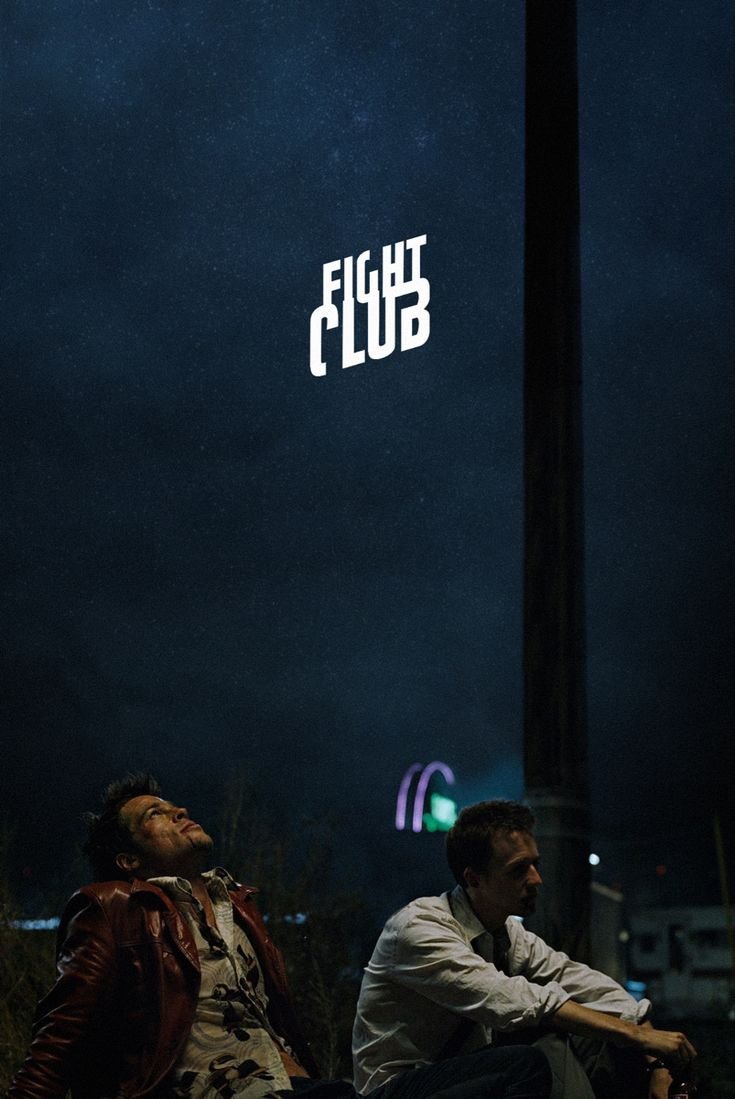
The first rule of Fight Club? You absolutely talk about Fight Club. And when you do, the chances are high that the stark, defiant image of its iconic poster — featuring Brad Pitt and Edward Norton, fists raised in rebellion — is already burned into your mind's eye. This isn't just a piece of promotional material; it's a visual manifesto, a punch to the gut that perfectly encapsulates the film's anarchic spirit and enduring cultural power. Diving into the Fight Club Poster History & Iconography reveals not just a marketing triumph, but a masterclass in how a single image can distill complex themes of alienation, consumerism, and identity into an unforgettable visual statement.
At a Glance: The Iconic Fight Club Poster
- A Visual Manifesto: The poster isn't just an ad; it's a direct visual interpretation of the film's core themes: rebellion, duality, and societal critique.
- Key Elements: Features Brad Pitt and Edward Norton with raised fists, bold, gritty typography, and a desaturated, stark aesthetic.
- Symbolism: The raised fists symbolize defiance and the raw, cathartic violence of the underground club, while the duo represents the protagonist's fractured psyche.
- Cultural Impact: It became an immediate cult classic, generating buzz and anticipation, and cementing itself as a lasting memento and emblem for fans worldwide.
- Fincher's Vision: The poster mirrors director David Fincher's artistic choices—a lurid, controlled palette and a deliberate "dirty, grainy" look—reflecting the film's cynical take on modern life.
The Genesis of a Grunge Classic: From Unsuitable Novel to Unforgettable Film
Before we dissect the poster, it's crucial to understand the fertile, often turbulent, ground from which Fight Club emerged. Released 26 years ago, David Fincher's adaptation of Chuck Palahniuk’s 1996 debut novel was hardly a straightforward Hollywood production. The material itself, exploring contemporary alienation, estrangement, and disillusionment through the lens of an underground bare-knuckle fighting club, was initially deemed "unsuitable" by some 20th Century Fox producers.
Yet, a few visionary minds, including Josh Donen and Ross Bell, recognized its raw potential. Laura Ziskin of Fox 2000 took the plunge, acquiring the rights for a mere ten thousand dollars. For David Fincher, already known for his dark and meticulous thrillers like Se7en, this wasn't just another project; it was a deeply personal one. He saw it as a "nineties inverse" to Mike Nichols’ The Graduate, portraying a generation adrift, lacking possibilities, and unable to change their lives through conventional means.
Fincher’s commitment to his vision was fierce. He fought for creative control, notoriously replacing studio-mandated dialogue and ensuring the script by Jim Uhls (with uncredited re-writes from Andrew Kevin Walker) stayed true to the novel's provocative core. The director even used the naming of three film characters (Detective Andrew, Detective Kevin, and Detective Walker) to thank Walker for his invaluable, uncredited contribution. This defiant spirit, this refusal to conform to studio expectations, wasn't just a behind-the-scenes anecdote; it became the very essence of the film, and subsequently, its marketing.
Deconstructing the Original Poster: More Than Just a Pretty Punch
The primary Fight Club movie poster is an iconic piece of art. It���s not just a snapshot; it's a meticulously crafted visual argument that captures the raw, unsettling energy of the film. You see it, and you instantly know what you’re in for: something visceral, challenging, and profoundly anti-establishment.
The Power of the Raised Fist: A Universal Symbol of Defiance
At the heart of the original design are the two protagonists, played by Brad Pitt and Edward Norton, with fists raised. This isn't a pose of triumph or aggression in the typical Hollywood sense. Instead, it’s a gesture of readiness, defiance, and a visceral embrace of pain and struggle. It reflects the film's rebellious and anarchic nature, signaling a break from polite society and an embrace of primal urges.
This iconography taps into a universal visual language. A raised fist has long been a symbol of solidarity, rebellion, and power across various counter-cultural movements. Here, it’s distilled to its essence, stripped of political banners, and placed in the context of personal, internal revolt. It's an invitation to confront the hollowness of modern life, to feel something, anything, even if it hurts.
Gritty Aesthetics & Bold Typography: Echoes of Fincher's Vision
Visually, the poster leans heavily into a gritty, desaturated aesthetic. The color palette is controlled, almost lurid, dominated by dense, rich blacks and muted tones that evoke a sense of decay and urban grime. This directly mirrors Fincher’s stylistic choices for the film itself, where cinematographer Jeff Cronenweth (in his first collaboration with Fincher) worked to make the movie look "dirty and grainy" through techniques like stretched contrast, underexposure, and resilvering.
The typography is bold, stark, and almost industrial, often featuring a sans-serif font that feels both modern and uncompromising. It's designed to grab attention without being ornate, reflecting the film's no-frills, confrontational attitude. The title itself, "Fight Club," isn't softened or stylized; it's presented with an almost brutalist honesty. This combination of visual grunge and straightforward text makes the poster feel less like an advertisement and more like a declaration.
The Narrator and Tyler Durden: Duality in Design
Crucially, the poster features both Edward Norton and Brad Pitt. This isn't just about star power; it's a subtle visual cue to the film's central theme of duality and the unreliable narrator. Without giving away the film's major twist, the poster hints at the intertwined, almost indistinguishable nature of these two characters. They stand side-by-side, united in their rebellious stance, yet subtly distinct enough to suggest a tension.
Fincher’s film is a coming-of-age story for people in their thirties, where the 29-year-old narrator, having failed to find happiness by conforming, meets Tyler Durden and embarks on a journey of self-destruction and maturity. The poster visually represents this internal journey, where the protagonist grapples with frustration and rage, leading to a metaphorical — and literal — self-realization. The "impossible" camera moves Fincher employed in the film, sometimes using CGI to illustrate complex ideas like becoming the gas in an explosion, find their conceptual echo in how the poster visually distorts traditional heroic narratives.
Fincher's World, Visualized: From IKEA to Iconic Imagery
Fincher’s cynicism about commercials and narcissistic ideals permeates Fight Club. The famous IKEA catalog scene, for instance, used motion control to perfectly convey the hollowness of material possessions, depicting the narrator living in a "fraudulent idea of happiness." This anti-consumerist sentiment isn't just a theme within the film; it's baked into its very aesthetic and, by extension, its promotional materials.
The Fight Club poster doesn't sell you on glamour or escapism. It sells you on confrontation and introspection. It challenges you, much like Fincher's entire directorial approach, which he described as "four-dimensional chess"—a masochistic endeavor aimed at creating an environment for authentic performance rather than micromanagement. He famously sought to make "pervert stories" rather than traditional heroic narratives, and the poster is a direct manifestation of this counter-cultural ethos. You can see more compelling examples of this visual storytelling across various Fight Club movie posters that have been released over the years.
Crafting an Icon: The Marketing Challenge and the Poster's Triumph
Marketing Fight Club was never going to be easy. How do you promote a film that doesn't glorify violence, but rather uses it as a metaphor for a lost individual’s transformation and a diagnosis of societal discontent? A film that, despite its gritty exterior, is ultimately about a protagonist's journey to maturity and self-acceptance?
The poster succeeded by sidestepping conventional marketing. It didn't feature a romantic lead, a clear antagonist, or a simple action pose. Instead, it presented an enigma, a challenge. The visual language was strong enough to generate buzz and anticipation precisely because it was so distinct and uncompromising. It promised an experience, not just entertainment.
This deliberate approach made the poster a powerful tool for attracting its target audience: those disillusioned with the status quo, who resonated with the film's critique of consumerism and corporate culture. It spoke to the desire for authenticity in a world increasingly filled with manufactured realities.
The Poster as a Cultural Artifact: An Enduring Emblem
Beyond its initial promotional role, the Fight Club poster quickly transcended its commercial purpose. It became a cultural artifact, a rallying cry for a generation feeling unseen and unheard. For fans, it’s not just an image; it’s a memento, a badge of belonging.
You see iterations of this poster everywhere: on dorm room walls, t-shirts, fan art, and social media profiles. Its iconography—the raised fists, the bold typography, the gritty color palette—has been endlessly parodied, referenced, and reinterpreted, solidifying its place in pop culture history. It stands alongside other cinematic emblems as a shorthand for a complex narrative, instantly recognizable and deeply resonant.
Common Misconceptions About the Poster's Message
While powerful, the Fight Club poster can sometimes be misinterpreted, particularly by those who haven't seen the film or fully grasped its nuanced themes.
- Glorifying Violence: Some might assume the raised fists symbolize an endorsement of violence. However, the film itself does not glorify violence. Instead, it depicts the raw, often ugly, reality of it as a desperate outlet for societal frustration and personal transformation. The poster captures this primal release, not a celebration of brutality.
- Simple Action Film: The poster's aggressive stance might lead some to believe it's a straightforward action flick. While it has intense sequences, Fight Club is primarily a psychological drama and a sharp social satire. The "action" on the poster is a metaphor for internal struggle and external rebellion against consumer culture.
- About Two Characters: While Pitt and Norton are prominently featured, the poster, by featuring them side-by-side in such a unified yet distinct manner, is actually hinting at the complex, internal struggle of one character, the Narrator. It subtly foreshadows the duality that lies at the heart of the story.
Beyond the Original: Variations and Legacy
While the iconic "raised fists" poster is the most recognized, Fight Club has spawned various other posters and promotional images over the years. Some feature the film's famous "soap" motif, others focus on specific characters or stylistic elements. Each variation attempts to capture a different facet of the movie's multifaceted identity, but none quite hit the raw, immediate impact of the original.
These alternative designs, alongside countless fan-made renditions, speak to the enduring fascination with the film's themes and visuals. They underscore how deeply Fincher's vision, brought to life by his crew and cast (including Helena Bonham Carter, cast over others like Janeane Garofalo and Reese Witherspoon), resonated with audiences and continues to inspire visual artists and cultural commentators alike.
Your Own Fight Club Poster: Tips for the Collector or Fan
If you're drawn to the Fight Club poster and want to own a piece of its history, here are a few things to consider:
- Identify Originality: Authentic theatrical release posters from 1999 are collector's items. Look for specific printing marks, sizes, and paper quality. Reproductions are common and often much cheaper.
- Condition Matters: Like any collectible, the condition significantly impacts value. Look for posters with minimal creases, tears, or fading.
- Framing for Preservation: If you acquire an original or a high-quality print, invest in archival, acid-free framing materials to protect it from light and environmental damage.
- Consider Variations: Explore different international versions or limited-edition art prints. Sometimes these offer unique artistic interpretations that appeal to specific tastes.
- Placement and Display: The Fight Club poster is a statement piece. Consider where it will hang and how its powerful imagery will interact with your space. It's meant to provoke thought, so give it room to breathe.
The Enduring Resonance of a Single Image
The Fight Club poster isn't just good design; it's a piece of cultural shorthand. It captures the essence of a film that—26 years later—continues to diagnose societal discontent, challenge consumerism, and explore the messy, often violent, path to self-discovery. It stands as a testament to the power of visual communication, proving that sometimes, the most potent messages are delivered not through words, but through a single, defiant image. It invites you, the viewer, to question, to feel, and perhaps, to find your own fight.